Play of Light and Shadow
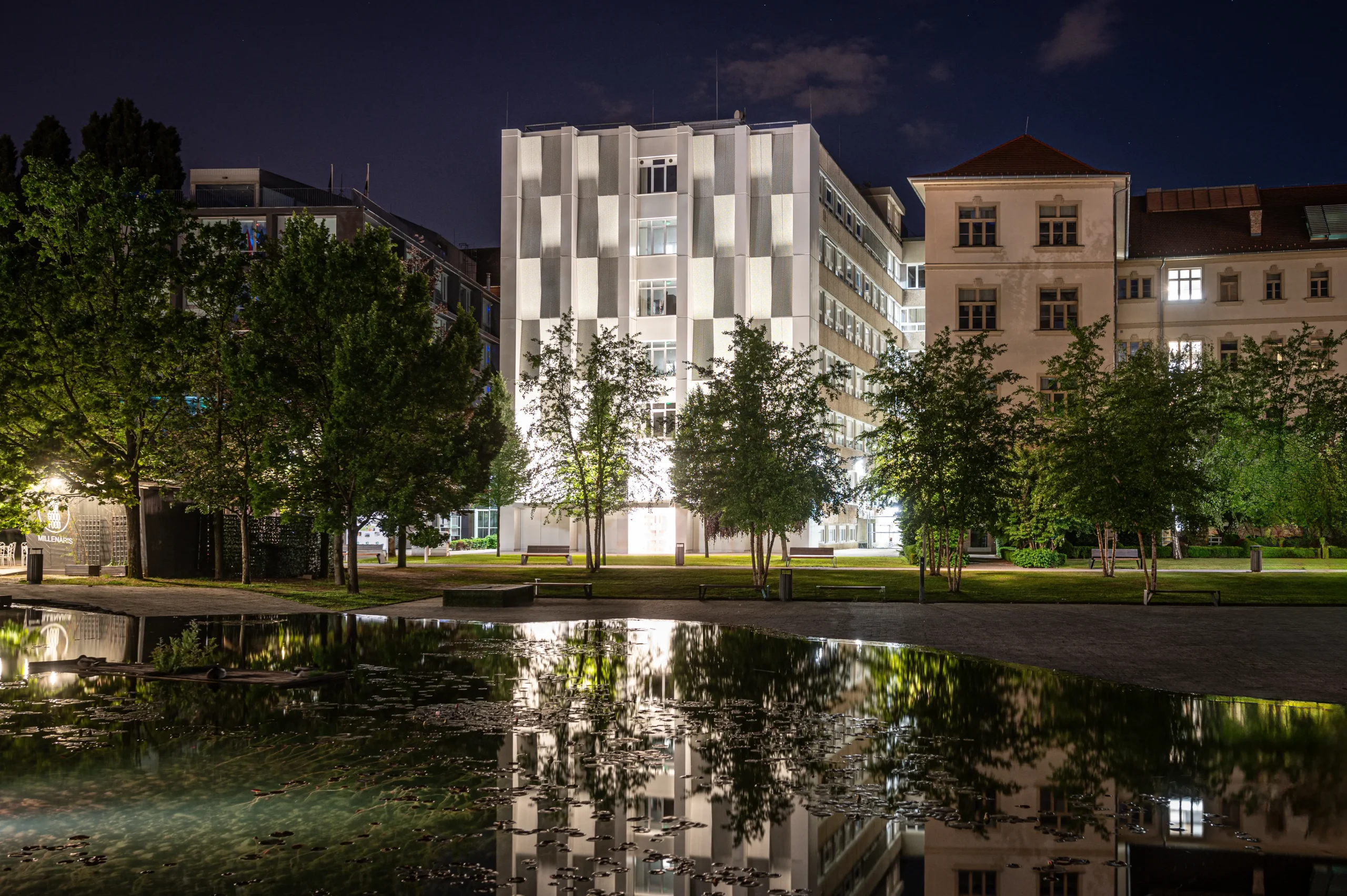
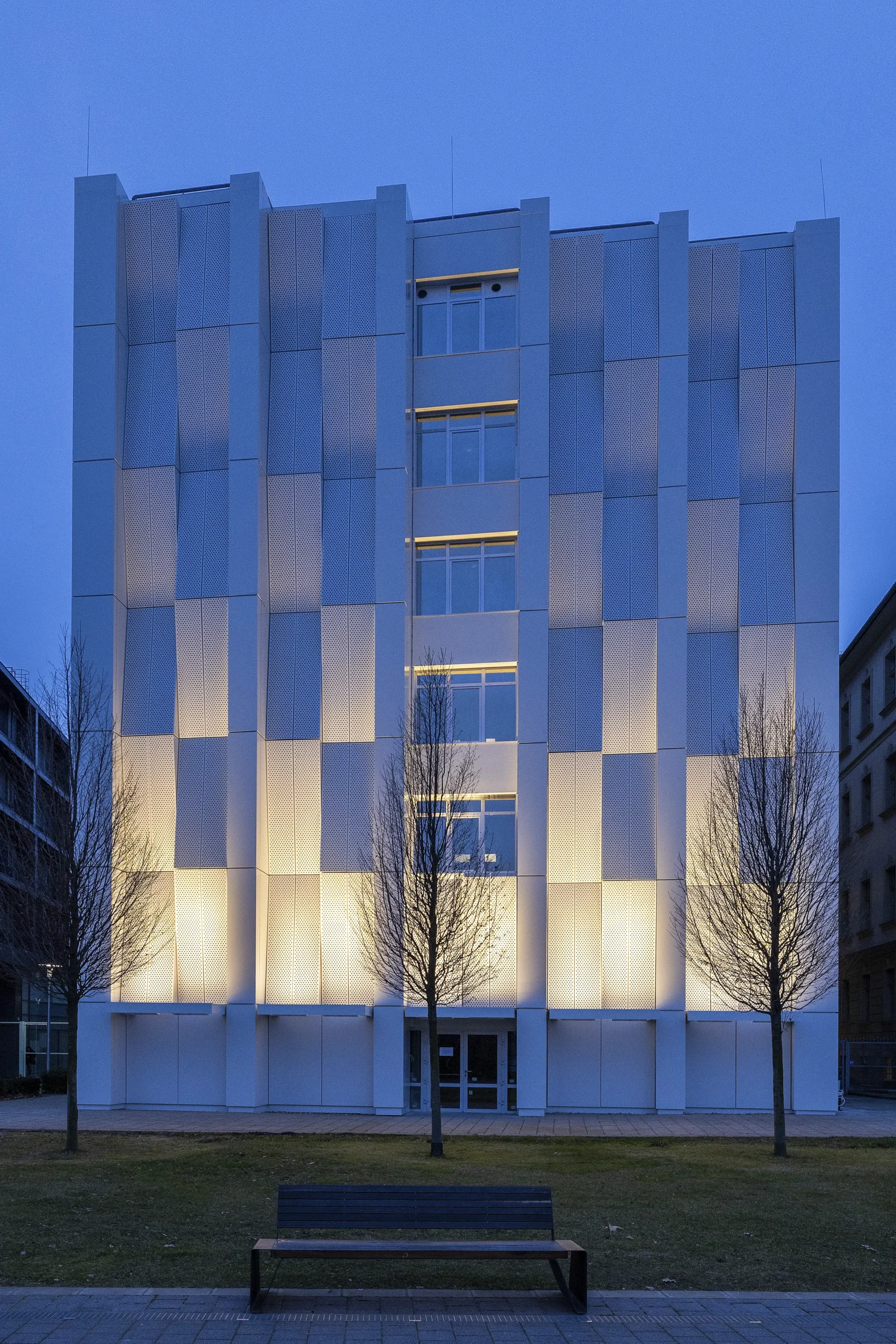
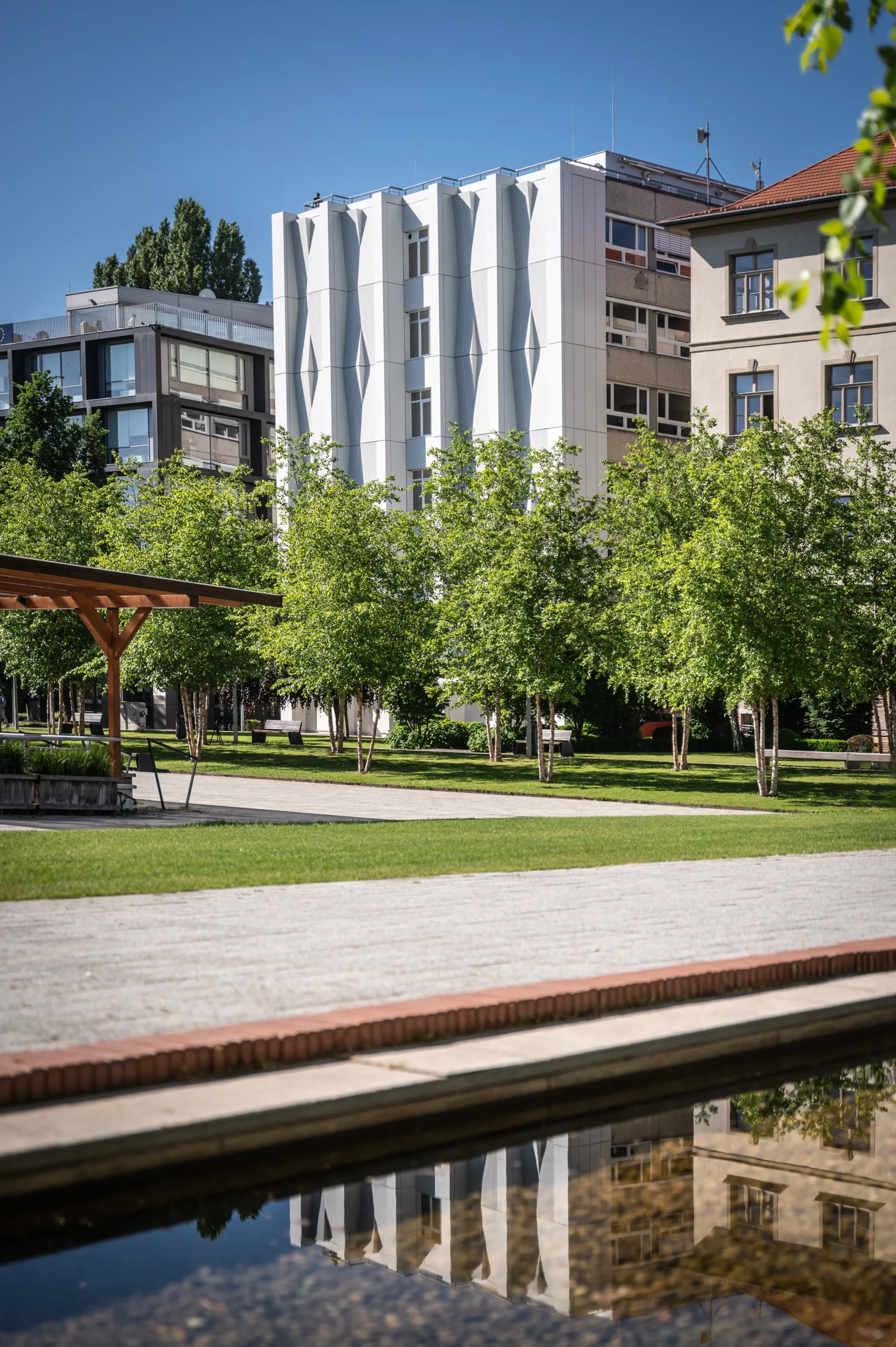
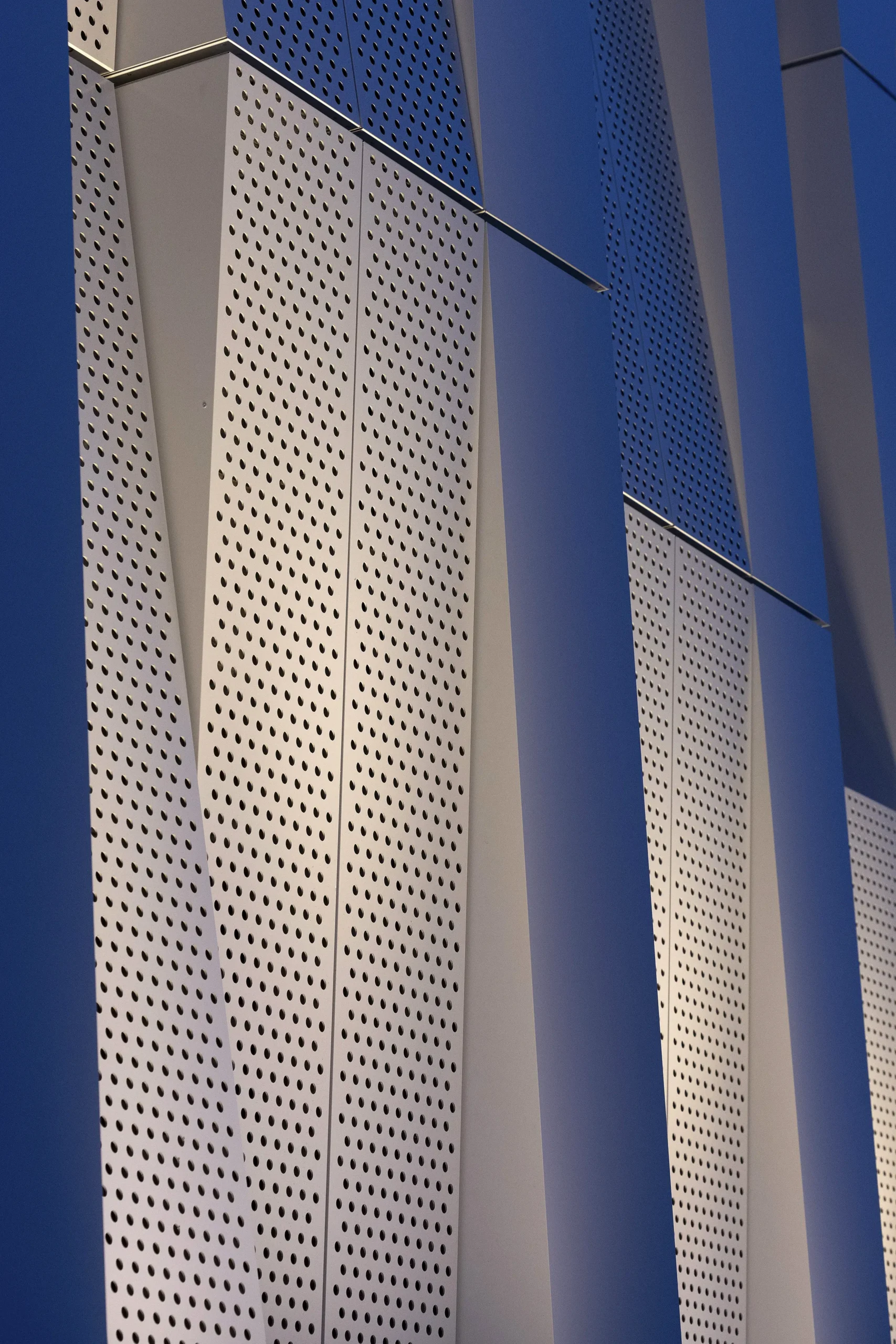
During the day, the façade is animated by the changing play of light and shadow created by the movement of the sun, offering a constantly evolving and dynamic visual experience. At night, RGB-W façade lighting further enhances the building’s appearance, adding a new dimension to its identity.
The neutral white surface of the façade allows it to be easily transformed through light, enabling subtle or expressive color variations. For special occasions, pre-programmed lighting scenarios can be activated, adapting the building’s appearance to specific events and making it stand out even more prominently within its urban context.
Design Concept and Constraints
From the outset, it became clear that achieving a true transformation of the building’s character would require more than a simple recoloring or window replacement. The selection of materials was therefore defined early in the design process.
The building’s structural characteristics — particularly the articulated façade divided by reinforced concrete columns — significantly influenced both dimensional and detailing possibilities. The widest column spacing served as the basis for the design logic, with all elements proportionally aligned to it. Material constraints further determined that each structural bay would accommodate four vertical “ribbon” elements rather than two.
Additional technical challenges included integrating lightning protection systems within the new façade and concealing existing exterior electrical cabinets behind the cladding.
The renovated façade not only offers a renewed aesthetic experience but also contributes functionally to the urban landscape. Through the interplay of light and shadow, combined with innovative lighting solutions, the building presents a dynamic and engaging presence both day and night — enriching Budapest’s contemporary architectural identity.
Lobby and Boardroom
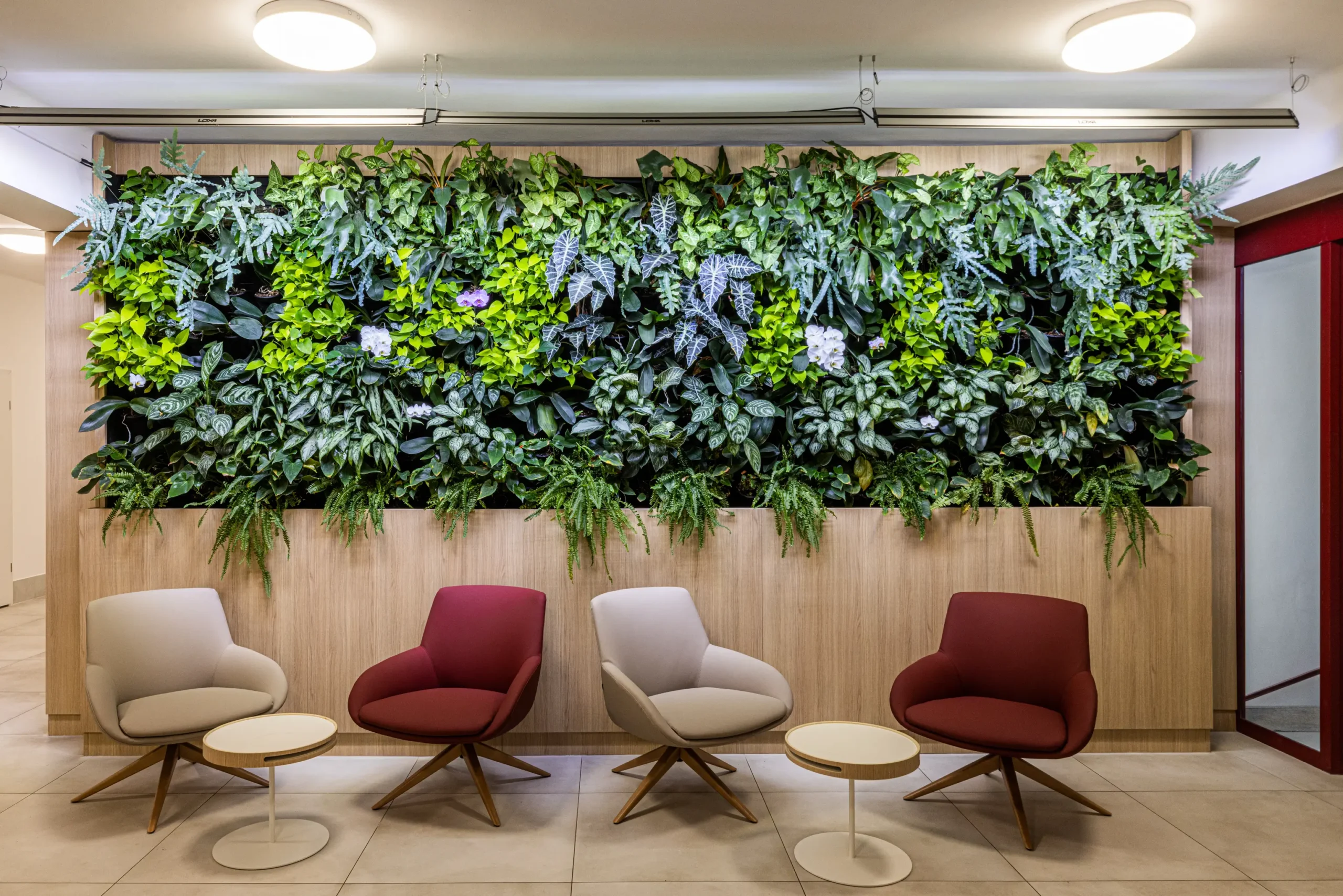
The existing lobby and ground floor areas were revitalized without significant changes to their original functions. The design concept draws inspiration from the perforated metal language of the new façade. To create a more welcoming interior atmosphere, this cooler metallic aesthetic was balanced with warm wood finishes.
An important objective was also to introduce FŐMTERV’s brand colors into the interior, with the characteristic red accent subtly enriching the spaces.
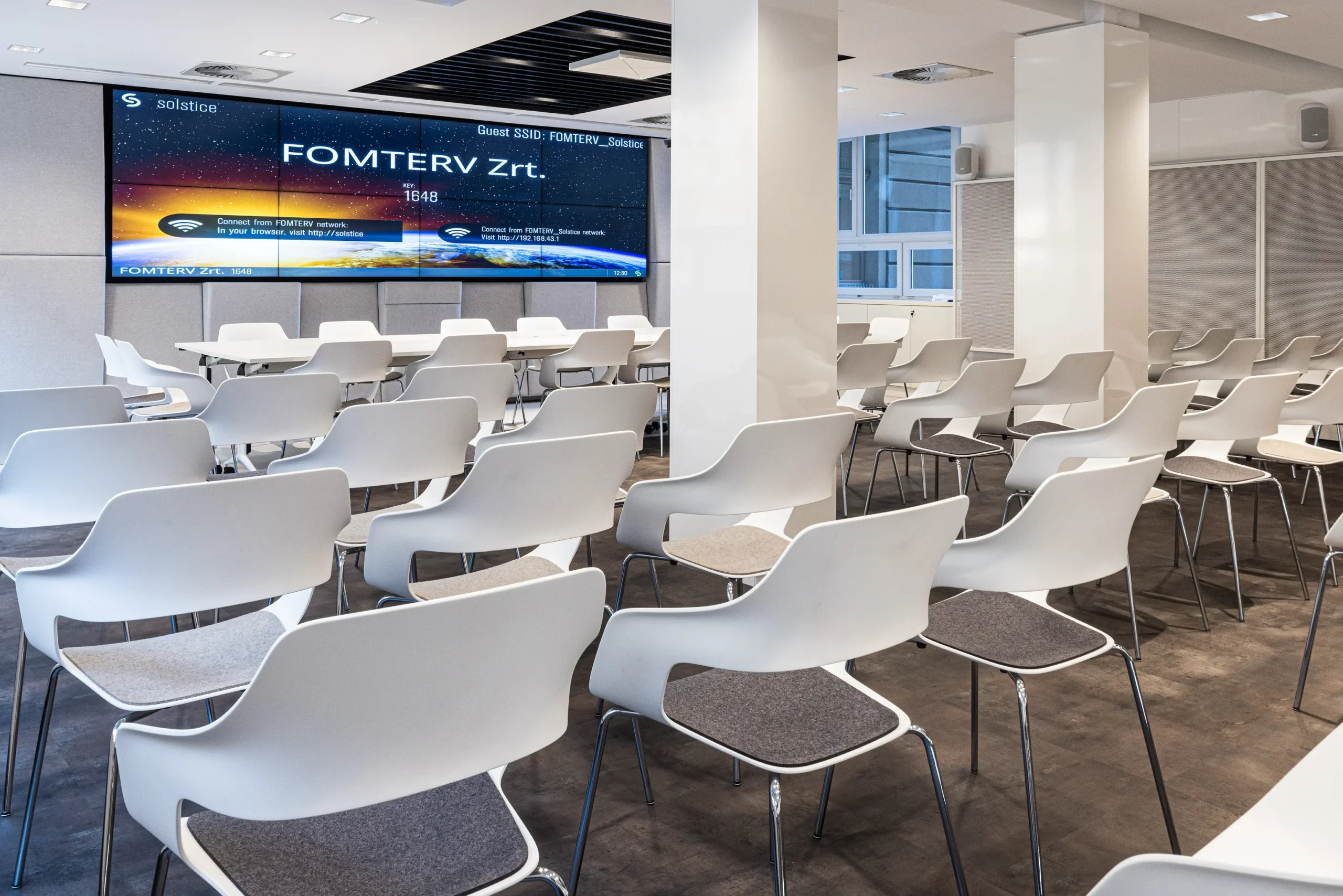
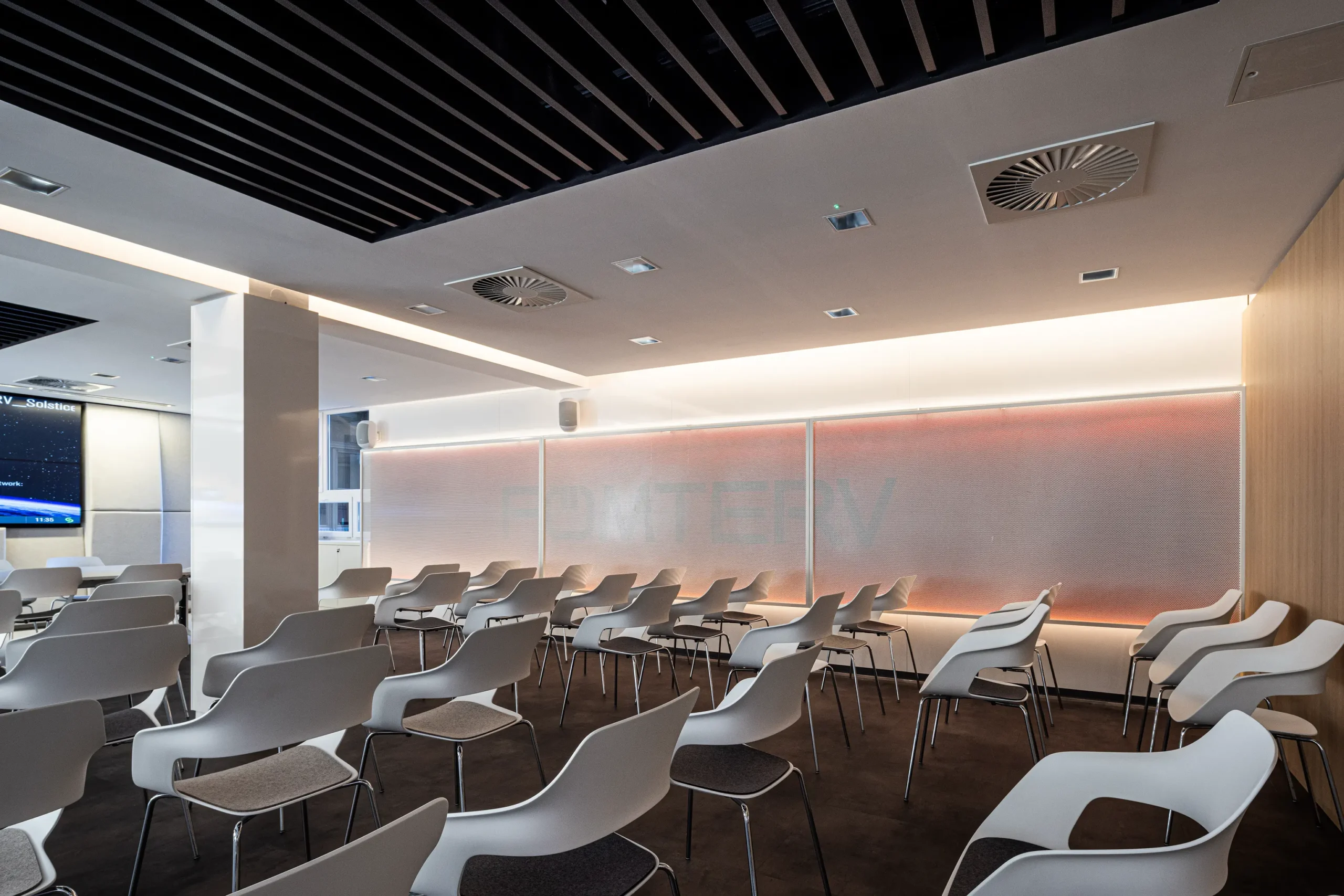
In the boardroom, outdated audiovisual systems were replaced with a modern video wall, capable of supporting a wide range of functions — from conferences and video calls to the presentation of technical drawings — meeting the demands of contemporary professional use.